Paradise of Birds
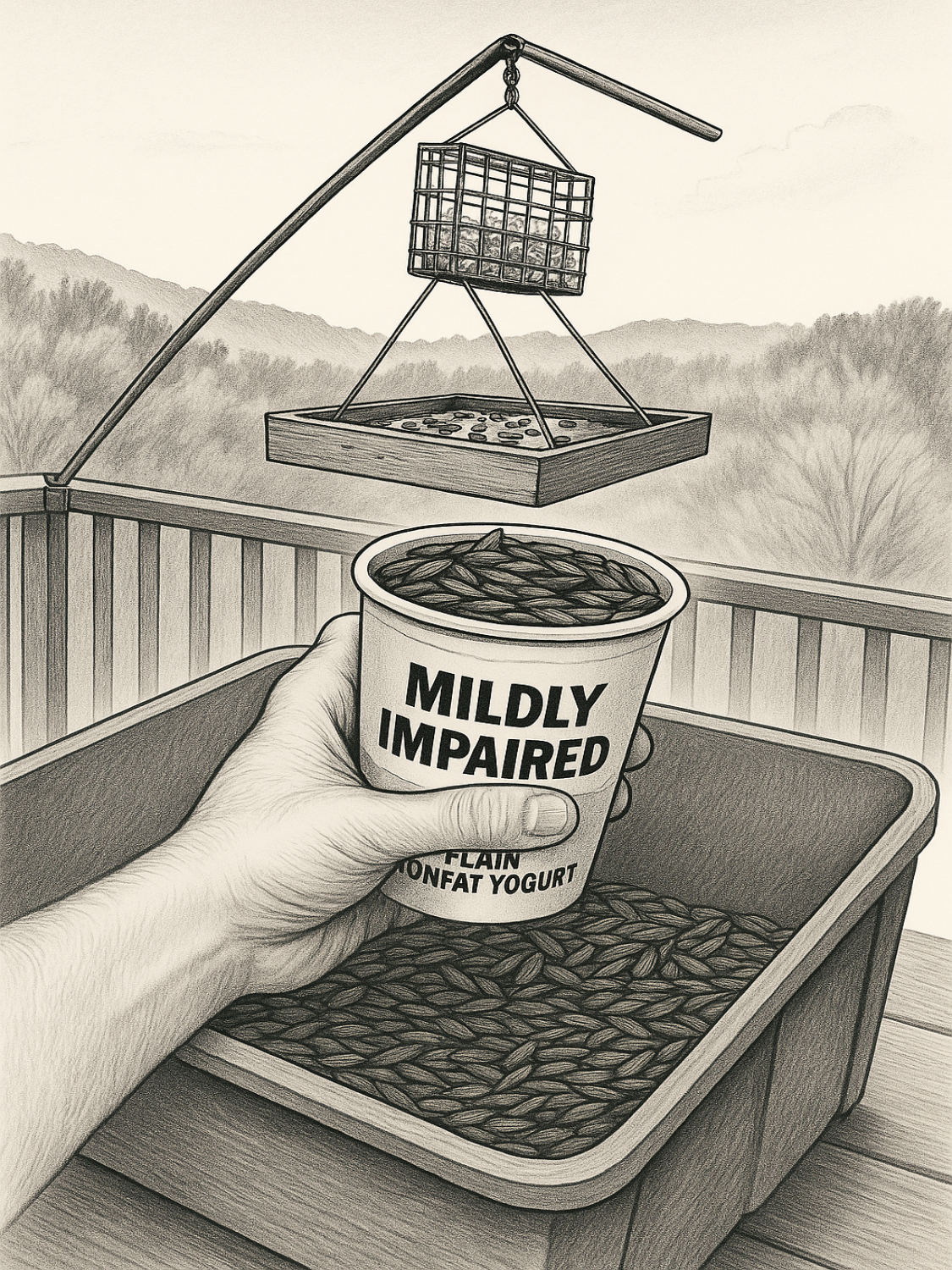
We live in a bird paradise—or at least a paradise for people who like to watch birds. The feeder hangs from the deck rail, and birds come from sunup to sundown. They get two cupfuls of seeds every three days or so.
Paradise of Birds
We live in a bird paradise—or at least a paradise for people who like to watch birds. The feeder hangs from the deck rail, and birds come from sunup to sundown. They get two cupfuls of seeds every three days or so.
Something in the Air
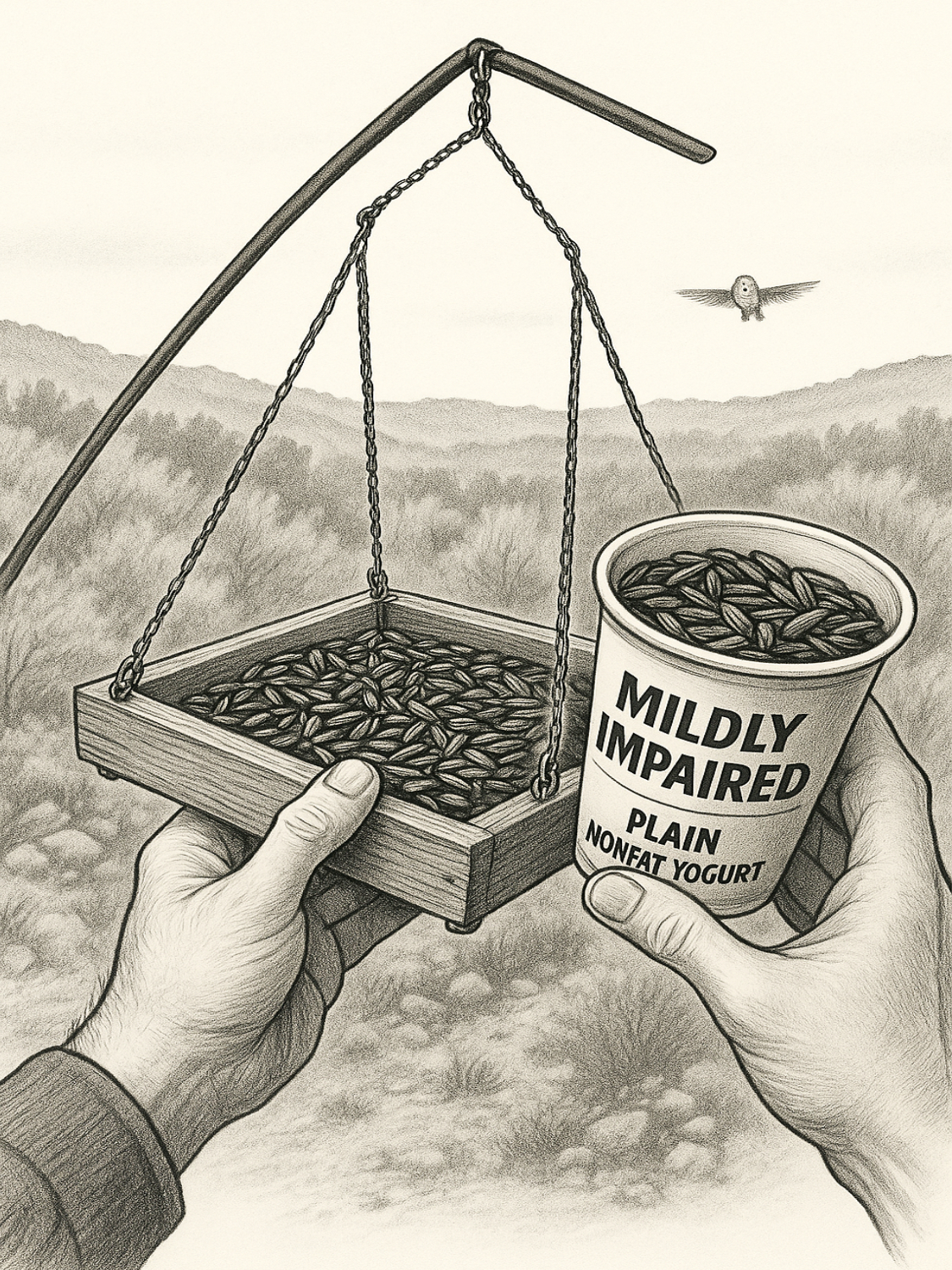
Birds always scatter when I'm at the seed platform, so I'm alone as I steady it to pour in a second cup. Note my product placement opportunity—buy Mildly Impaired Yogurt!)
Company
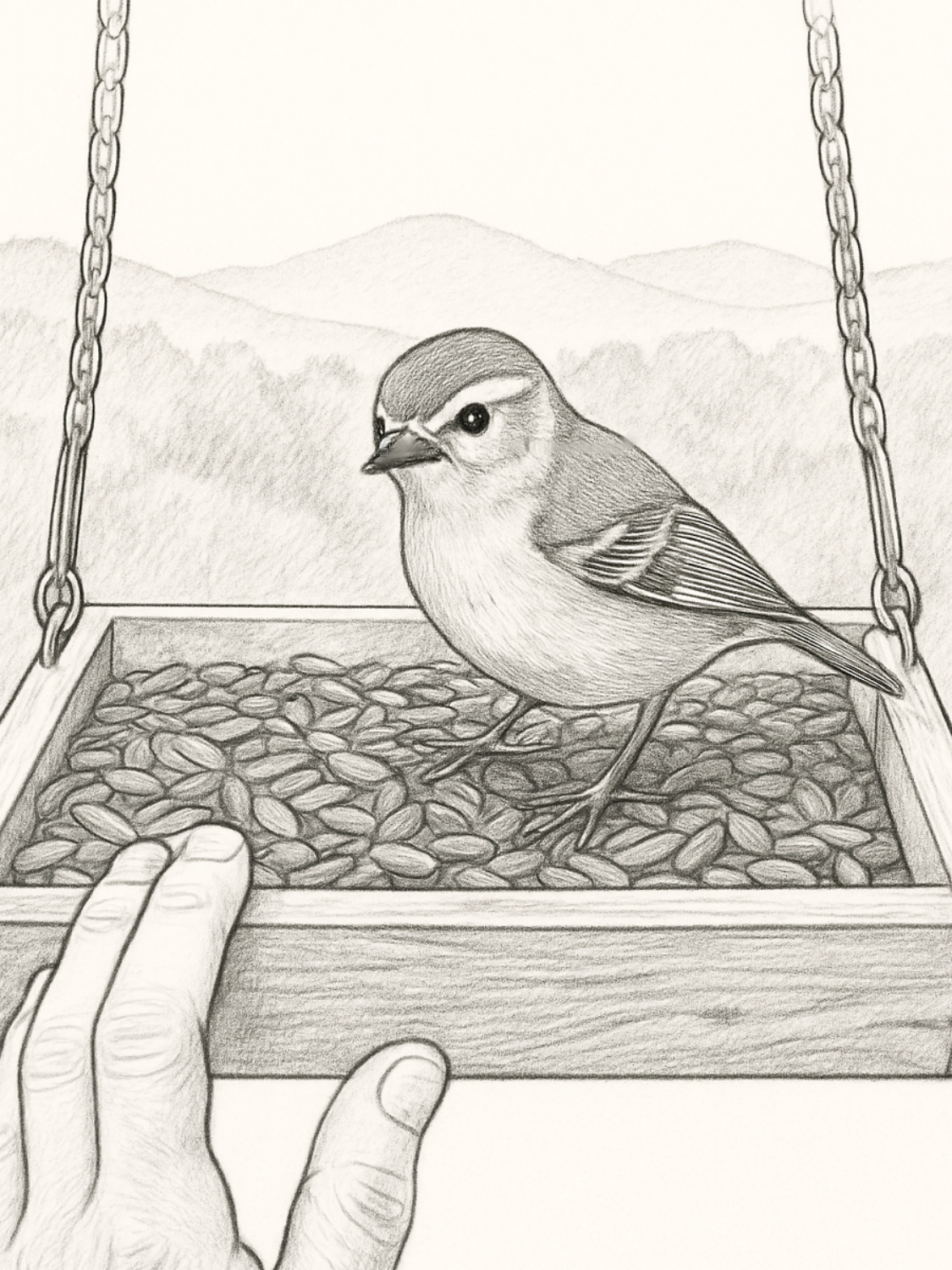
A pretty, sparrow-sized, olive-gray bird I've never seen before lands directly in front of me. Instead of leaving, this bird is calm, even with my hand only a few inches away.
Recognition
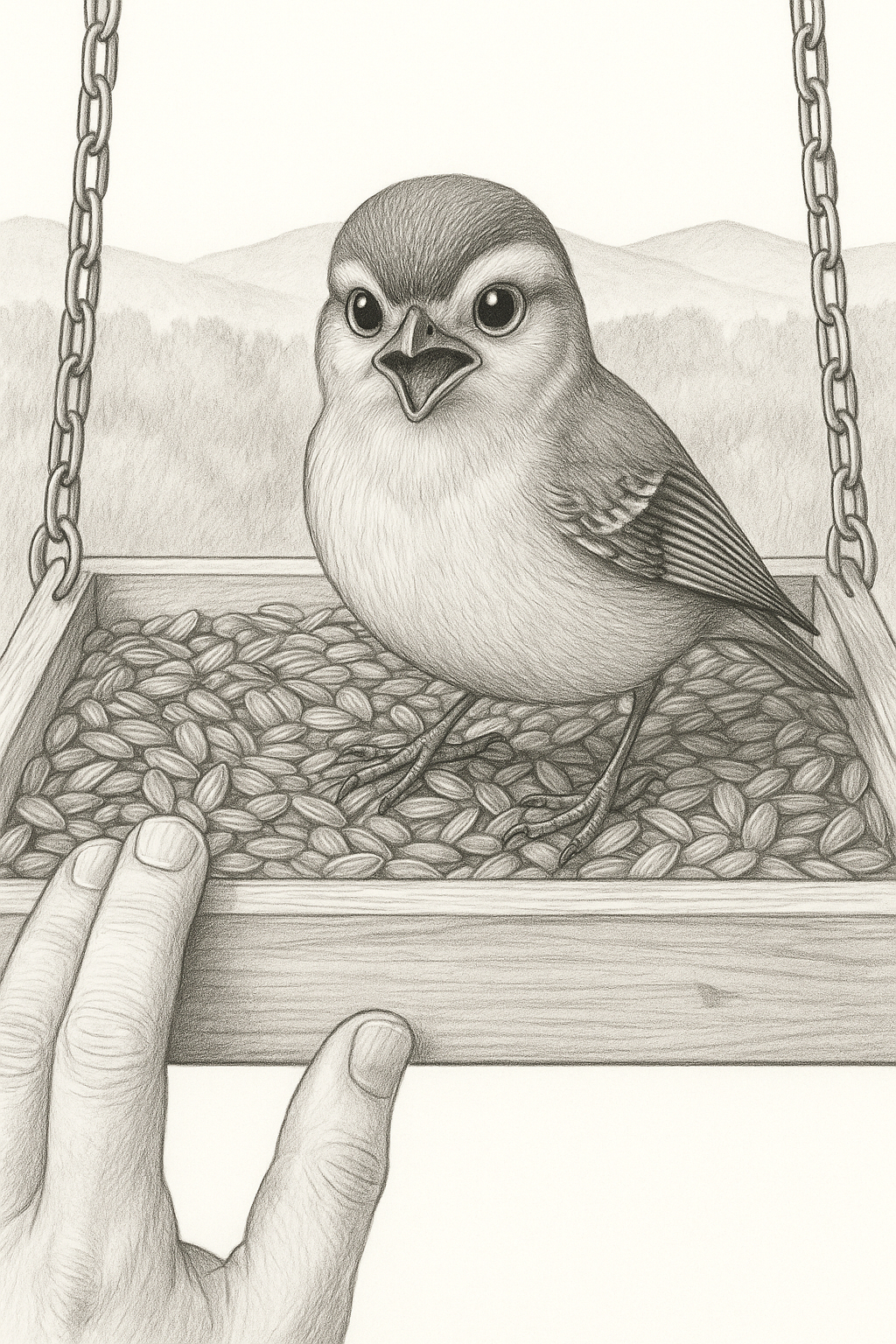
Then its gaze moves from my hand to my face, and it's clearly surprised to see this huge, unfeathered biped. Damn. It'll be gone any moment.
Red Alert
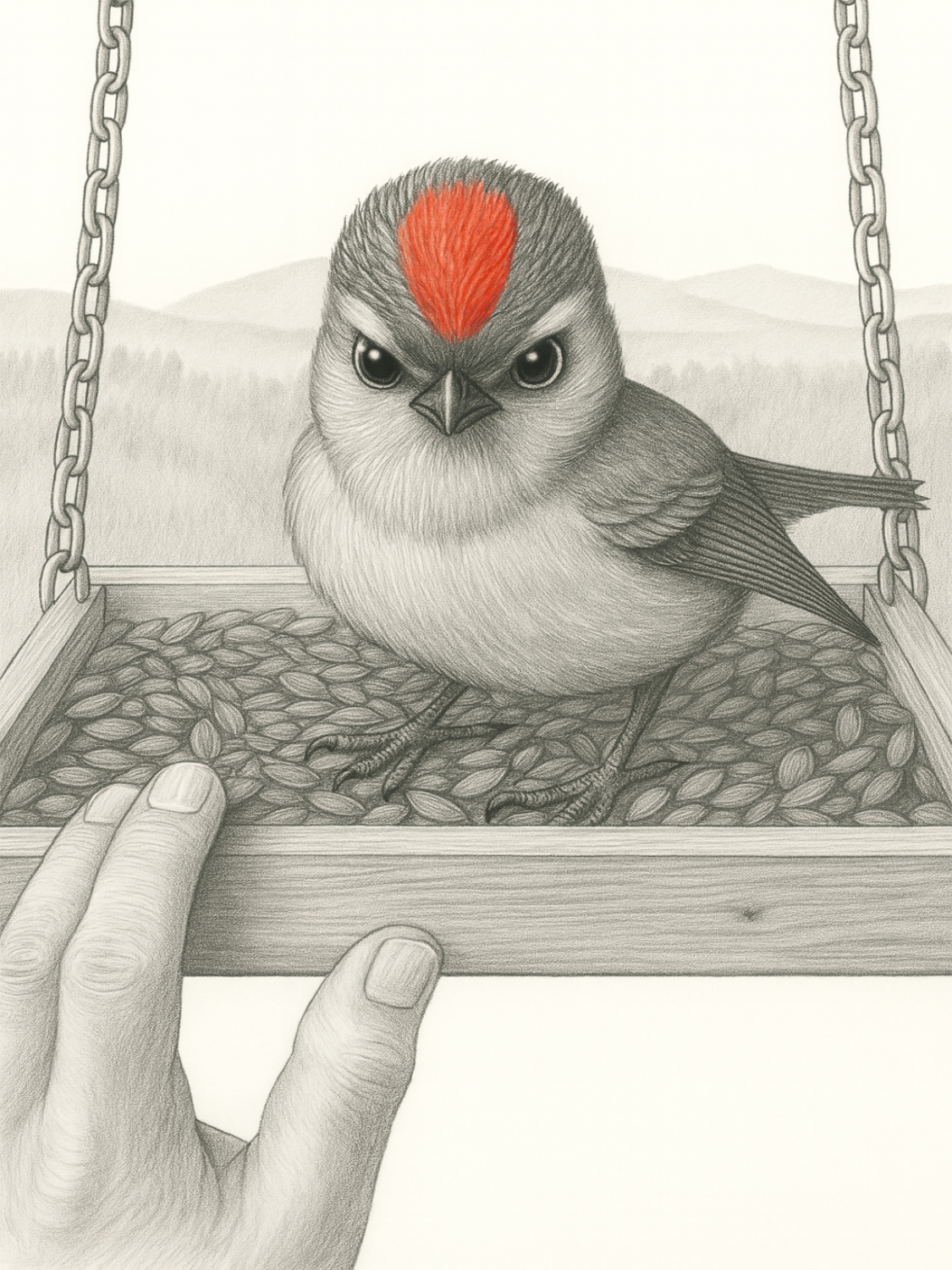
Instead of bolting, its head and body lower into a shallow bow. The dark-olive crown parts at the midline and spreads, unveiling a bright, lens-shaped patch of red. I'm close enough to see the red area consists of flattened, tightly packed feathers. What the hell!?
You Ain’t Seen Nothin’ Yet
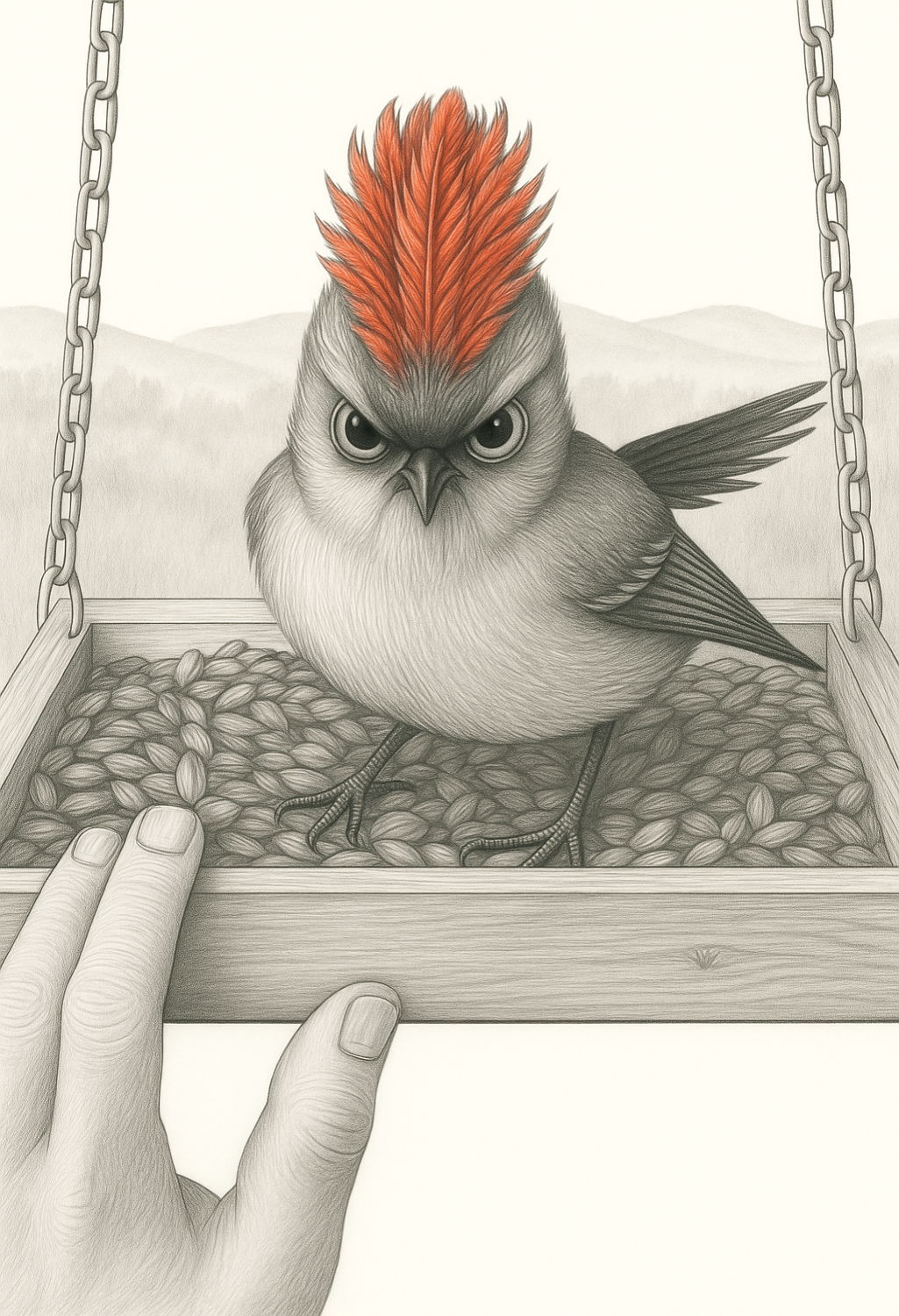
After a beat, the feathers flare into an impossibly large, gorgeous plume. Fearless and acting like he owns the place, my little opponent grants me a precious few seconds of admiration before flying away.
How's My Hair?
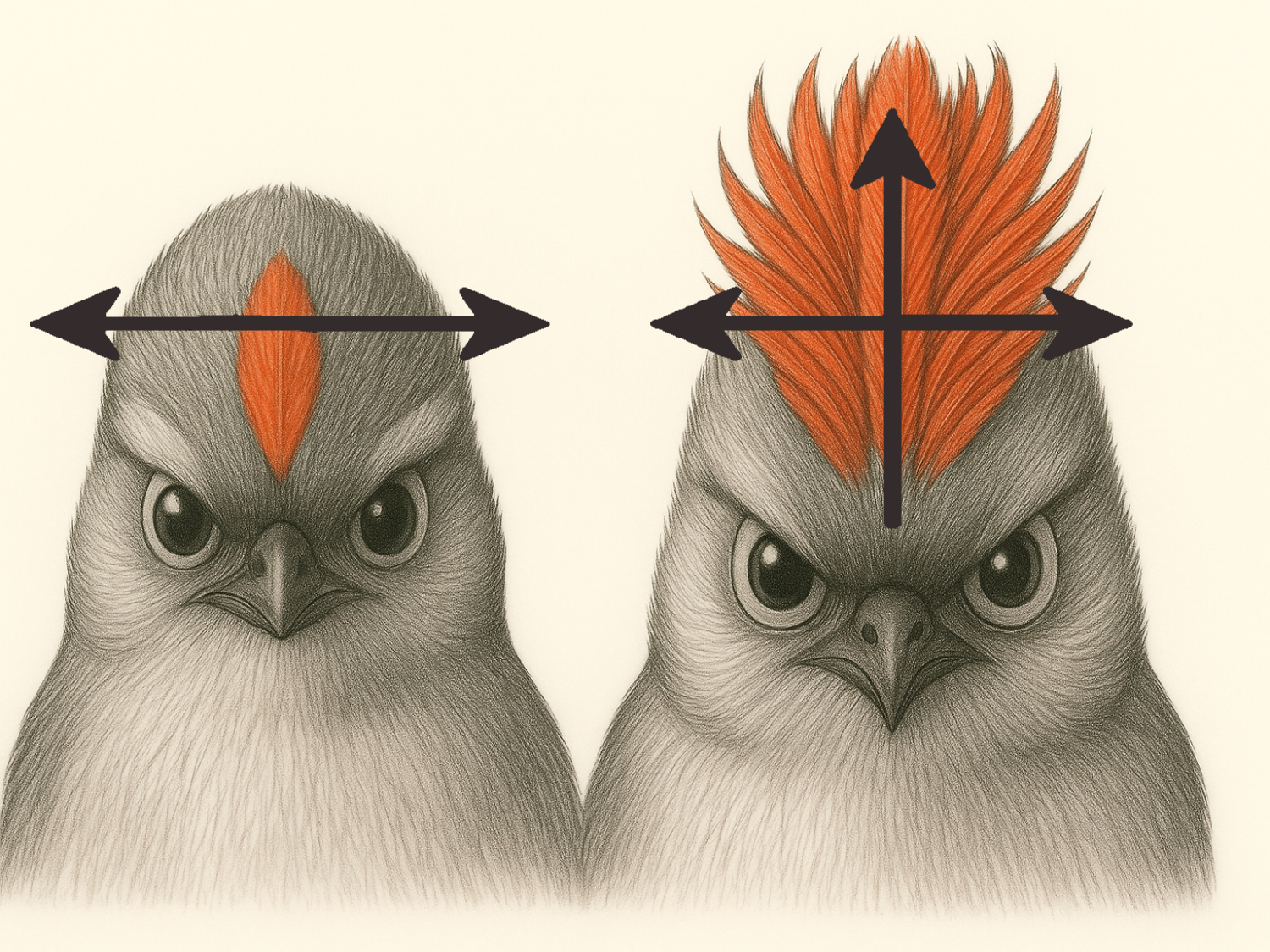
Beneath the crown feathers lies a layer of red display feathers that overlap like roof shingles. The kinglet’s display begins when arrector pili, muscles at the base of each feather, pull the crown feathers outward while the display feathers remain in place. As skin and feathers retract, the brow ridges widen, intensifying the bird's glare. The red seam widens to a broad ellipse, and as it reaches full width, the arrector pili lift the display feathers sharply upward to full erection.
Notes and Comments
All art for this story is in the style of Frank Stack. Read about him in the Artists Gallery.
Blooper Reel
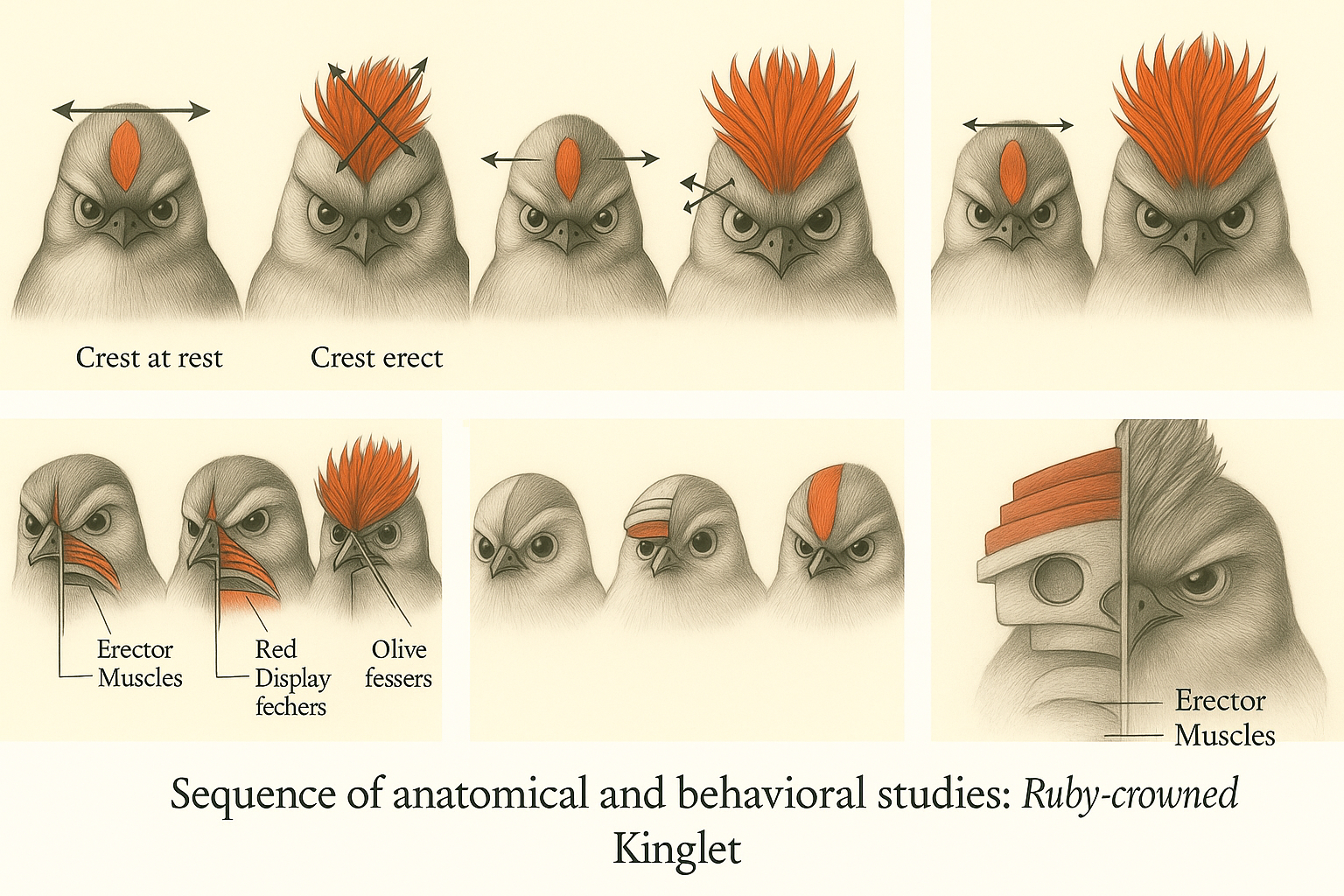
Creating illustrations with ChatGPT is a painfully iterative process. When I enter a prompt for a drawing, it often takes several attempts to get it right. For the above display physiology panel, there was such a strange variety of failed attempts that a "blooper reel" felt imperative. The bottom images are feather and muscle layer fails. The top (after giving up on the dissections) are arrows and captions.
And it gets weirder. Here's my conversation with the AI regarding a title for this Murderers' Row of failures.
ChatGPT: If you’d like, I can help you title it, e.g., “Sequence of anatomical and behavioral studies: Ruby-crowned Kinglet”
Me:Haha, that’s a hilarious approach; were you intending that?
ChatGPT: Haha — honestly, no. That was a happy accident of storytelling through chaos.(appended smiley emoji.)
Punchline: We botched the caption, mixing fonts and sizes, and hanging the last word. It's too meta. Or maybe two metas. I knew I had to leave it as is.